Choosing the best Kinds Of Cooking Pot from China requires more than comparing attractive shapes or low prices. Chinese cookware reflects centuries of regional cooking experience, from smoky wok dishes in Guangzhou to slow-cooked clay soups in Guangdong. Each pot behaves differently over heat, oil, moisture, and time.
This guide examines carbon steel woks, cast-iron pots, stainless-steel cookware, clay pots, and ceramic vessels. It considers heat response, durability, cleaning effort, cooking methods, and compatibility with gas, electric, or induction stoves. A seasoned carbon steel wok can produce quick stir-fries with bright vegetables and crisp edges. A clay pot holds gentle heat well, making it suitable for rice, broth, and braised dishes. Cast iron offers strong heat retention, but it feels heavy and needs careful drying.
Details matter.
Reliable buyers should check material descriptions, food-contact information, handle construction, and manufacturer traceability. Glazed cookware deserves special attention. Independent testing for lead and cadmium can provide useful reassurance, especially when the product lacks clear documentation. Some traditional-looking pots may not suit modern induction cookers. Others may crack when moved from a hot burner to a cold surface.
There is no single winner. Personal cooking habits, kitchen equipment, maintenance preferences, and budget shape the answer. I have found that a beautiful pot can still disappoint when its base warps or its handle becomes uncomfortable. That limitation deserves honest attention. The following outline compares practical options and explains which Chinese cooking pot may fit different kitchens best.
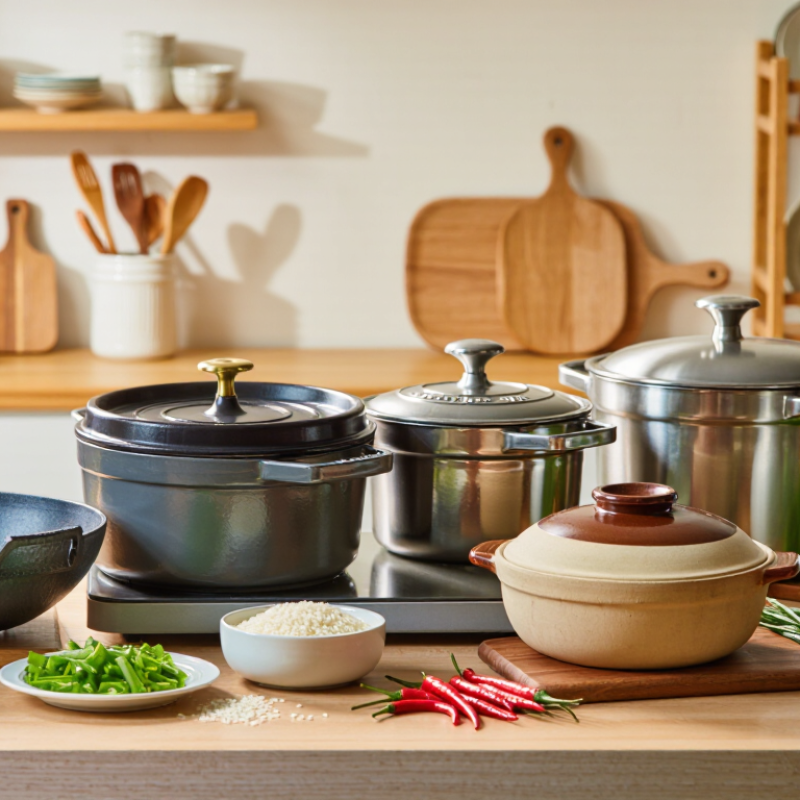
Chinese cooking pots are defined less by shape than by material. Carbon-steel woks heat quickly, respond well to high-flame stir-frying, and develop a dark seasoning layer over time. They are light, but they can rust when left wet. Cast iron holds heat longer, making it useful for deep-frying, braising, and slow cooking. It is heavier and less forgiving when dropped.
Stainless steel stockpots offer durability, easy cleaning, and stable performance with soups or noodles. However, food may stick if the surface is cold or overheated. Aluminum pots warm rapidly and reduce handling fatigue, though softer aluminum can scratch more easily. Traditional clay pots provide gentle, even heat for rice, herbal soups, and clay-pot dishes. Their porous structure needs careful drying and gradual temperature changes.
A 2024 Fortune Business Insights report valued the global cookware market at about 19.7 billion dollars in 2023, showing strong demand for everyday cooking equipment. Material choice remains practical, not decorative. In kitchen trials, a thick carbon-steel wok often gives better temperature control than a thin one. I still overheat mine occasionally. That mistake creates uneven seasoning and a smoky kitchen. Look for a stable base, comfortable handles, and material thickness suited to your stove. The best Chinese cooking pot is rarely the most expensive; it is the one matching your heat source, recipes, and maintenance habits.
| Pot Type | Main Material | Typical Shape and Features | Best Uses | Heat Performance | Care Requirements | Main Advantages | Important Considerations |
|---|---|---|---|---|---|---|---|
| Chinese Wok | Carbon steel; some versions use cast iron or stainless steel | Deep, rounded body with a wide opening; available with a long handle, two loop handles, or both | Stir-frying, deep-frying, steaming, braising, and boiling | Heats quickly and responds rapidly to changes in burner temperature | Carbon-steel models should be seasoned, dried thoroughly, and lightly oiled after washing | High versatility, efficient tossing, and excellent control for fast cooking | A round-bottom wok generally requires a wok ring; a flat-bottom wok is more practical for flat stovetops |
| Chinese Cast-Iron Wok | Cast iron | Heavy, thick-walled wok with strong heat retention | Searing, stir-frying larger portions, braising, and slow cooking | Heats more slowly than carbon steel but retains heat for a longer time | Keep dry, season regularly, and avoid prolonged soaking | Stable cooking temperature and strong durability when properly maintained | Heavy weight makes lifting and quick tossing more difficult; thermal shock can cause cracking in some cast-iron cookware |
| Clay Cooking Pot | Unglazed or glazed earthenware clay | Thick porous or semi-porous walls; often designed for gentle, enclosed cooking | Clay-pot rice, soups, braised dishes, and slow simmering | Warms gradually and distributes heat gently, helping retain moisture | Follow the maker's heating instructions; avoid sudden temperature changes and check whether the pot is stove-safe | Creates gentle cooking conditions and can retain heat after removal from the stove | Not all clay pots are suitable for direct flame, induction, or rapid temperature changes |
| Ceramic-Coated Casserole Pot | Ceramic body or metal body with a ceramic or enamel coating | Covered pot with smooth, non-reactive cooking surface | Soups, stews, braises, porridge, and low-temperature cooking | Provides steady, moderate heating; performance depends on the base material | Use non-abrasive utensils and avoid sudden thermal changes that may damage the coating | Easy food release, attractive appearance, and suitability for acidic ingredients | Coatings can chip or wear if struck, overheated, or cleaned with abrasive materials |
| Stainless-Steel Stockpot | Stainless steel, often with an aluminum or copper-layered base | Tall, straight-sided pot with two side handles and a fitted lid | Stocks, soups, noodles, blanching, boiling, and steaming with an insert | Durable steel is corrosion-resistant; a layered base improves heat distribution | Wash after use and remove discoloration with a suitable non-abrasive cleaner | Non-reactive surface, strong durability, and easy cleaning | Single-layer stainless steel may heat unevenly; food can stick if the pan is overheated or insufficiently oiled |
| Aluminum Steamer | Aluminum, sometimes anodized or combined with stainless steel | Stacked perforated tiers with a lower pot for boiling water | Steaming dumplings, buns, fish, vegetables, rice, and layered dishes | Aluminum heats quickly and transfers steam efficiently throughout the tiers | Dry promptly; avoid harsh alkaline cleaners, especially on untreated aluminum | Lightweight, fast-heating, and convenient for cooking several layers at once | Untreated aluminum can discolor or react with strongly acidic or alkaline foods |
| Bamboo Steamer | Bamboo with woven or slatted construction | Stackable round baskets with a fitted lid; used above a wok or compatible pot | Dumplings, buns, fish, vegetables, and delicate foods | Allows excess condensation to escape, helping preserve texture | Rinse or wipe clean, dry completely, and avoid prolonged soaking or dishwasher use | Lightweight and effective for gentle steaming with reduced water dripping | Must fit securely over the steaming vessel; parchment, cloth, or liners can help prevent sticking |
| Brass Cooking Pot | Brass, usually a copper-zinc alloy; many cooking versions have a tin or other food-safe lining | Decorative, highly conductive pot traditionally used for selected cooking applications | Specialty simmering, serving, or traditional preparation when properly lined | Transfers heat efficiently and responds quickly to temperature changes | Inspect the lining regularly and use only products intended for food preparation | Excellent thermal conductivity and distinctive traditional appearance | Unlined brass is not suitable for all foods, especially acidic ingredients; lining condition is essential for safe use |
| Nonstick Wok or Pot | Aluminum or steel body with a bonded nonstick coating | Wok or saucepan shape with a smooth, low-friction interior | Low-fat stir-frying, eggs, delicate foods, and quick everyday cooking | Heats quickly, but excessive heat can shorten the life of the coating | Use low or medium heat, soft utensils, and non-abrasive cleaning methods | Easy food release and simple cleanup with little oil | Not ideal for very high-heat wok cooking; replace the cookware if the coating is badly damaged or peeling |
Carbon steel heats quickly and responds well to strong flames. A thick wok usually controls temperature better than a thin one. Dry it completely after washing. Moisture can create rust. I still overheat mine sometimes.
Cast iron holds heat for a long time. It suits deep-frying, braising, and slow cooking. It is heavy and can crack or damage surfaces when dropped. Use sturdy handles and lift carefully.
Stainless steel works well for soups, noodles, and daily cooking. It resists rust and cleans easily. Food may stick when the surface is cold. Overheating can also cause sticking.
Aluminum warms rapidly and feels easier to handle. This helps during long cooking sessions. Softer aluminum can scratch more easily. Inspect the interior after repeated use. Small scratches may become annoying.
Clay pots provide gentle, even heat. They suit rice, herbal soups, and clay-pot dishes. Dry the pot fully after washing. Avoid sudden temperature changes. Cracks can appear without warning.
Ask for food-contact documentation and relevant migration testing. Documentation may reference GB 4806.9 for metallic food-contact materials. Check coatings, aluminum surfaces, and decorative areas carefully. A shiny finish proves little.
Inspect the rim, handle joints, and interior surface. Uneven welds can trap food and moisture. Handles should feel firm, not merely comfortable. Loose rivets are a warning sign. I underestimated this once.
Request thermal-cycle, coating-abrasion, and salt-spray test results when available. Check whether the base stays flat after heating and cooling. For induction, test magnet response across the whole base. The center alone is not enough.
Choosing among the many Kinds Of Cooking Pot from China begins with understanding their materials, shapes, and intended uses. Common options include cast iron, carbon steel, stainless steel, aluminum, ceramic, and clay pots, each offering different levels of heat retention, responsiveness, durability, and maintenance. Traditional round-bottom designs work well with high-heat cooking methods such as stir-frying, while flat-bottom pots are more practical for modern stovetops. Clay and ceramic pots are suitable for slow cooking, steaming, and preserving rich flavors, whereas steel and iron pots are better for boiling, frying, and searing.
For home cooks and professional kitchens, the best choice depends on cooking frequency, stove type, capacity, and budget. When comparing quality, consider even heat distribution, sturdy handles, balanced construction, food-safe surfaces, secure lids, corrosion resistance, and ease of cleaning. A reliable Chinese cooking pot should match your daily recipes while offering long-term safety and durability. By evaluating material, design, maintenance needs, and cooking style together, buyers can select a pot that delivers dependable performance in either a household or commercial kitchen.

 Weihua Hardware